

Over the years, I've had the chance to work with some great people on projects where the end goal was getting a brand new product into the marketplace. I can't share most of those stories in full — NDAs are NDAs — but I can lean on that experience, and more importantly, I can walk you through my own path of bringing two products to market: a manufactured egress window cover, and a self-help e-book.
Neither of these are massive, venture-backed success stories. They are real, scrappy, self-funded journeys, and I think that's exactly why they're useful. Here's what I learned, step by step, and what I'd tell anyone starting down a similar road.
Finding the Problem: The Egress Window Cover
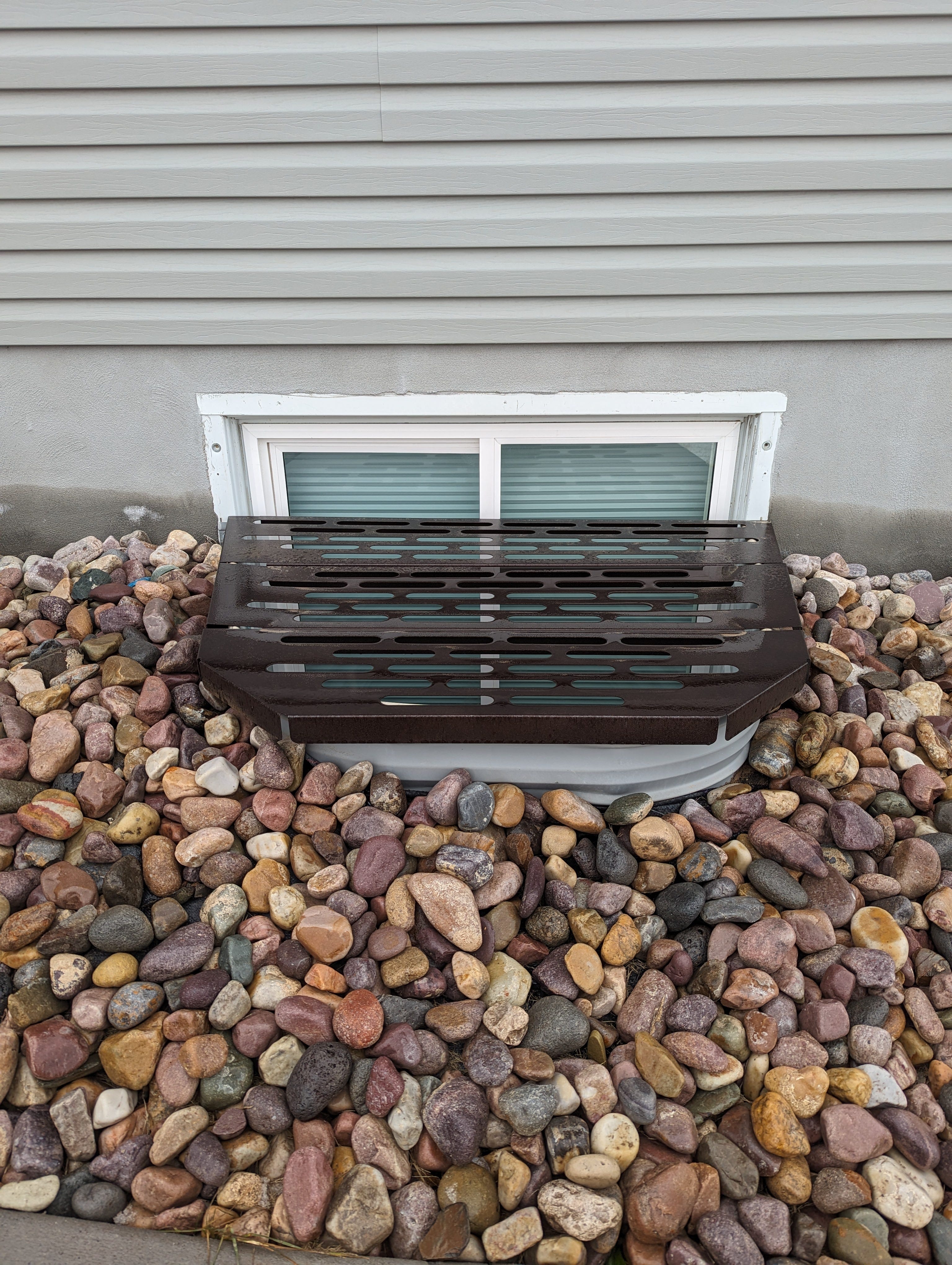
The idea came to me almost by accident. I was exploring different cities to potentially move to, and I noticed something odd: a lot of houses with basements had egress window wells, and most of them were left wide open. No covers.
I wondered why, and the answer became obvious pretty quickly. The covers that existed on the market required either a trip to pick one up from a local distributor, or a full installation crew showing up at your house. Neither of those is a dealbreaker, exactly, but we live in a world where people expect to order something online and have it land on their doorstep, ready to install themselves. That gap was the opportunity.
That is step one of bringing any product to market, and it's the step people skip the most: find an actual problem worth solving. Not a feature you think is cool — a friction point real people are already living with.
Market Research: Trusting the Gap, Then Testing It
I started researching what was already out there. The cheap plastic covers lacked the durability I wanted to see. The premium options all routed through distributors or full-service installers. There was a real market — I could see it in how many businesses were operating in that space — and there was a real gap in how the product reached the customer.
I'll admit, some of my conviction came from my own bias: I knew that if I bought a house with a basement, I'd want my wells covered, and I'd want it delivered to my door. But at some point, you have to stop analyzing and start testing. I'm naturally an over-analyzer, and I recognized that I simply didn't have enough information to make a fully confident decision — so I made the call to move into prototyping instead of waiting for more data that wasn't coming.
If you're too afraid to put a little money on the line to find out, you'll never move past the idea stage. That's true of nearly every product I've seen go from concept to shelf.
Product Development: Specs, Prototypes, and Field Testing
I'd spent my early career as a drafter and designer, so building the prototype in-house was within reach. If that skill hadn't been there, partnering with a local fabrication shop would've been the move and honestly, that's the right call for most people at this stage.
I went out into the field and measured actual egress window wells, recorded the dimensions, and brought them into AutoCAD. One size came up again and again in a particular neighborhood, so that became my starting point.
Then I built out a ranked list of what the product actually needed to deliver:
Shippable
Lightweight
Kid-friendly
Durable
Cost-effective
Quality
Visually appealing
From there, I broke each one down further — could it ship in pieces? Could slots reduce weight while still letting light through? Could a hinge or bolt system make it removable by a kid in an emergency, while still standing up to a 200-pound adult walking across it? Every design decision traced back to one of these requirements.
The first prototype came together in three equal sections, sized to fit a 52" by 36" well. I tested fit and function first, then loaded it with weight. It held a 200-pound guy with minimal flex — but "minimal" wasn't "none." So I drilled holes into the flanges to bolt the sections together, and that one field modification drastically increased the rigidity. That's the iterative loop in action: design, test, find the weak point, fix it, test again.
After that, I sourced a local shop for powder coating and was genuinely happy with the result. A friend who needed covers for his own home asked if I'd build him five. I didn't make money on that batch — I basically donated the labor and customized the units to seal the deal — but it was worth every hour. It put product into the field for real-world, long-term durability testing I couldn't have replicated any other way.
The Business Side: IP, Planning, and Funding
Since I was self-funding, I held off on patents or trademarks at the prototype stage — that's a decision worth revisiting once a product proves itself, not before.
I did put together a business plan: target market, marketing approach, rough financial projections. I didn't over-engineer it, but having something to anchor to kept me focused and honest about where I actually was versus where I thought I was.
On funding, here's the one piece of advice I wish someone had handed me directly: take the number you think you'll need, and double or triple it. Payment terms from suppliers help, but you still need real cash on hand, and self-funding this kind of project always costs more than the spreadsheet says it will.
Manufacturing, Quality Control, and the Unsexy Details
I spent a lot of time here — getting quotes from suppliers across different quantities, packaging styles, and regions. I landed on a manufacturer that built in batches of ten and shipped via wooden crate, which turned out to be the sweet spot for cost and lead time. I'd uncrate them on arrival, then individually group and package each unit myself.
Quality control came together through real conversations with suppliers about surface finishes, bending techniques, and CNC capabilities. We landed on a process: laser or plasma cutting, press brake forming with segmented tooling, SP6 commercial blast cleaning for surface prep, and a high-solids poly or powder coat finish in either Mahogany Brown or Aluminum Gray. None of that is glamorous. All of it is what makes the difference between a product that holds up and one that doesn't.
Branding, Packaging, and Getting It in Front of People
For packaging, I found a box from U-Line that fit the product perfectly — sometimes the boring logistics question has a simple answer if you look.
Branding was harder, and honestly, still is. We chose not to reinvent the wheel and kept the product under my name, since it's a genuine extension of what that brand is about. We've been building that presence through LinkedIn and Facebook, and through a website built on WordPress and Bluehost that's gone through more than a few iterations as we've figured out what actually represents the work.
Distribution, for now, runs direct and that's a space I'm still actively building out, alongside marketing, sales channels, and everything that comes after a product exists but isn't yet in front of the people who need it.
Product Two: "Earn Your Success!"
The second product was a completely different animal: a self-help e-book called Earn Your Success! A Journey Towards Contentment, Growth, and Opportunities, now live on Amazon.
The "problem" here wasn't a physical gap in a market — it was something more personal. I'd lived through enough of my own professional and personal growth, enough hard-won lessons about perseverance, mindset, and figuring out what actually matters in a career and a life, that I wanted to put that into a structure other people could use. The book moves through personal growth, financial literacy, adaptability, leadership, and time management, then pushes into finding genuine purpose and direction, and finally into the discipline of not giving up when things get hard.
Where the window cover taught me fabrication and supply chains, the e-book taught me an entirely different production process. I knew the substance — the lessons, the structure, the voice I wanted — but I'm not a professional writer, so I brought in a ghostwriter to help shape the manuscript into something polished and readable while keeping it authentically mine. For the cover, I went to Fiverr and found a designer who could turn the concept into something that actually stood out on a crowded Amazon shelf.
That's really the core lesson from this second product: you don't have to be the expert in every part of the process. You have to know what the final product needs to be, and then go find the right people to help you get there. With the garage covers, that meant fabricators and powder coaters. With the book, it meant a ghostwriter and a cover designer. Same philosophy, completely different toolbox.
What Both Products Taught Me
Looking at these two side by side — a steel window cover and a self-help book — they couldn't be more different on the surface. But the underlying path was nearly identical: find a real problem or a real need, test your assumption before you're fully confident in it, build a rough version, get it in front of real people, and let their feedback shape what comes next.
Neither of these products turned into a massive business overnight. That's not really the point. The point is that both of them exist now, out in the world, doing what they were built to do — covers protecting basement window wells across actual homes, and a book sitting on Amazon helping someone work through their own version of growth and contentment.
If you're sitting on an idea right now, wondering if it's worth pursuing: it probably is, if it's solving something real. The only way to find out is to stop analyzing and start building — even if "building" just means a rough prototype, a messy first draft, or a conversation with the right person who can help you get from idea to shelf.